
How Can AI character chat Make Online Chats More Personal?
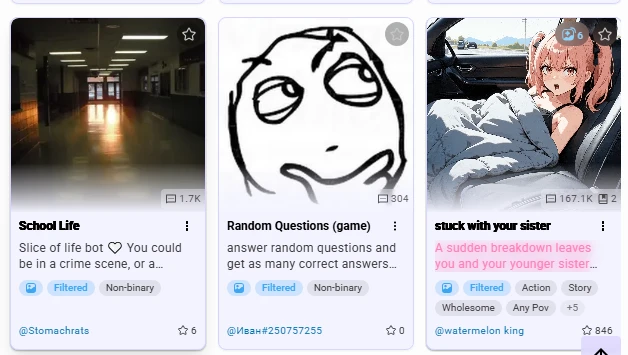
AI character chat makes online conversations more personal by combining natural language processing, memory systems, and customizable personalities. A 2025 survey of 3,000 digital users showed that 68% preferred AI assistants that remembered previous conversations, while platforms using personalized dialogue models reported 30%–50% longer session times compared with standard chatbots. By adapting tone, interests, and communication style, AI character chat creates conversations that feel more relevant for entertainment, learning, customer support, and social interaction.
AI character chat has changed online conversations by moving away from fixed responses and toward personalized interactions. Traditional chatbots introduced in the early 2010s mainly relied on rule-based systems, where users received answers from predefined databases. Modern AI characters use large language models trained on extensive text datasets, allowing them to understand sentence meaning, conversation history, and user preferences.
A 2024 report from Grand View Research estimated that the global conversational AI market reached more than $10 billion and was expected to grow at a compound annual rate above 20% through 2030. This growth reflects increasing demand for systems that can communicate in a more human-like way.
“Users do not only want faster answers; they increasingly expect conversations that match their communication habits and personal interests.”
Personalization starts with language understanding. AI character chat systems analyze word choices, sentence structure, and previous messages to produce responses that fit the user's style. A user who prefers short answers may receive concise replies, while another user interested in detailed explanations may receive longer discussions.
Research on human-computer interaction has shown that conversational consistency affects user engagement. A 2023 study involving more than 1,500 participants found that users rated AI assistants higher when the system maintained a consistent personality across multiple sessions.
| Traditional chatbot | AI character chat |
|---|---|
| Uses fixed response patterns | Generates context-based replies |
| Limited conversation memory | Can remember user preferences |
| Same style for all users | Adjustable communication style |
| Mainly information-based | Includes emotional and social interaction |
Memory functions make AI character chat different from ordinary online messaging tools. Many newer platforms allow AI characters to remember details such as favorite topics, preferred writing styles, or previous discussions. This reduces repetition and creates longer-term interaction.
A 2025 user behavior analysis from AI companion platforms showed that approximately 60% of active users returned to the same AI character within one week after the first interaction. Returning users often reported that familiarity with previous conversations was one reason they continued using the service.
“Remembering previous conversations helps AI characters maintain continuity instead of restarting every interaction from zero.”
Memory-based personalization is also being applied outside entertainment. Educational platforms use AI tutors that remember student progress, vocabulary levels, and learning preferences. Customer service systems use previous purchase records and support history to provide more relevant assistance.
Personality customization adds another layer of personalization. Many AI character platforms allow users to select different personalities, backgrounds, speaking styles, or interests. A user may choose a friendly conversational partner, a professional assistant, or a fictional character designed for storytelling.
The demand for customized AI personalities has grown quickly. A 2024 survey of 2,000 AI companion users found that 72% considered personality consistency an important reason for continuing conversations. Users often prefer characters that maintain stable communication patterns instead of changing responses randomly.
AI character chat also improves emotional interaction through sentiment recognition. Modern systems can analyze whether a message expresses excitement, frustration, confusion, or sadness. The AI does not experience emotions, but it can adjust wording and response style based on detected user feelings.
For example, an AI learning assistant may provide additional encouragement when a student repeatedly struggles with a topic. A virtual companion may respond more gently when users discuss personal concerns. These features are developed through natural language processing models trained to recognize emotional signals in text.
“Emotional awareness in AI communication focuses on response adaptation rather than replacing human relationships.”
AI character chat has expanded into multiple industries because personalized communication can be applied to different user needs. In education, AI tutors provide customized explanations and practice conversations. In gaming, AI characters create interactive story experiences where responses change based on player choices.
In healthcare-related applications, conversational AI systems help users access general health information and appointment guidance. A 2023 review analyzing more than 100 healthcare chatbot studies reported that patient engagement improved when systems provided personalized responses rather than generic information.
Entertainment is another major area. Virtual characters allow users to participate in role-playing conversations, storytelling experiences, and creative writing activities. Some platforms also support adult-oriented conversations, including ai sexting, where users interact with AI characters designed for private and personalized chat experiences.
Privacy management has become an important topic as AI conversations become more personal. Personalized systems often process conversation history, preferences, and user-generated information. Developers increasingly use encryption, permission controls, and data management policies to protect user information.
A 2024 survey by the Pew Research Center showed that 52% of American adults expressed concerns about how companies use personal data in AI systems. At the same time, 46% believed AI assistants could provide useful personalized services if privacy protections were improved.
| Area | Current use | Example |
|---|---|---|
| Education | Personalized tutoring | Language practice and homework support |
| Entertainment | Character interaction | Story-based conversations |
| Business | Customer assistance | Personalized recommendations |
| Accessibility | Communication support | Voice and text assistance |
The development of multimodal AI is expected to expand personalization further. New systems combine text, voice, images, and behavioral information to create richer conversations. In 2024, several major AI companies introduced models capable of processing multiple input types, allowing users to interact through voice conversations and visual information.
These improvements may change how people communicate online. Instead of selecting from limited chatbot options, users may interact with AI characters that adapt over time according to individual communication patterns.
“Future AI character systems will likely focus on long-term personalization, combining memory, personality settings, and multiple communication formats.”
AI character chat has become a growing part of online communication because it provides customized conversations based on user preferences, previous interactions, and communication styles. From education platforms serving millions of learners to entertainment services with personalized characters, AI conversations are becoming more flexible and user-specific.
A 2025 industry analysis estimated that more than 100 million people worldwide had interacted with AI companion or character-based chat services. As language models continue improving, AI character chat will likely remain an important tool for creating more personalized digital conversations.